Case study · Koyfin · 2016 — 2017

Professional market analytics, built for the investors Bloomberg priced out.

A Wall Street analyst wanted terminal-grade tools without the $25,000 price tag. We were his first engineering team: from an MVP in a few months to a production platform, and then the in-house team we helped hire to take it over.

Client
Koyfin, New York
Industry
Fintech · Market data
What we did
Architecture, development, DevOps, recruiting
Engagement
Feb 2016 — Dec 2017
Team
5 developers, 2 QA engineers, project manager
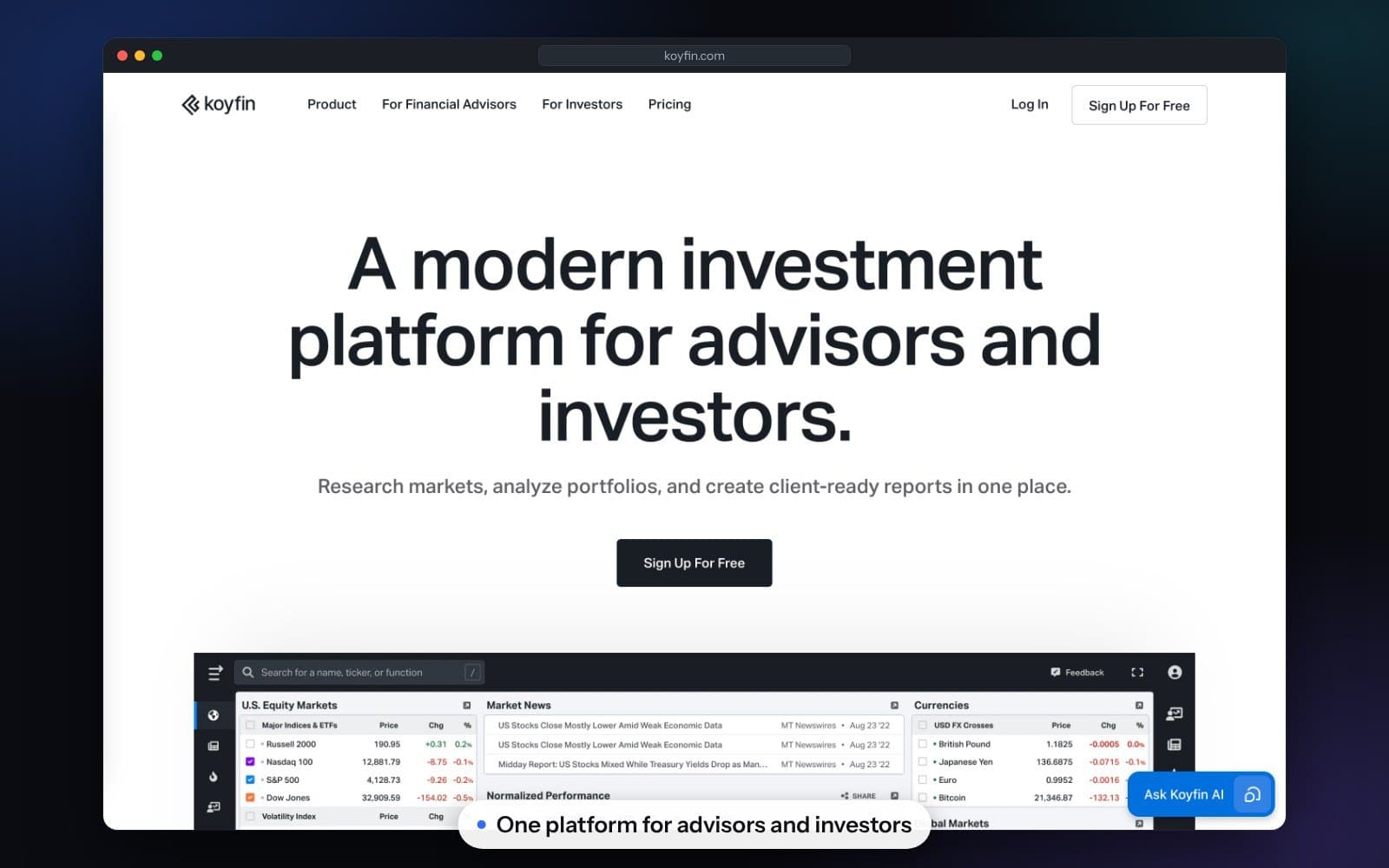
Koyfin today. It started as the first version we built together.
companies covered with historical stock prices
12,000+
major features, from real-time charts to a Bloomberg-style command line
13
people on the team, from two developers to a full product team in under two years
2 → 8

The problem

$25,000 a year, or Yahoo Finance

Rob Koyfman spent 15 years as an analyst and strategist at Goldman Sachs, Citigroup and several hedge funds, working every day in Bloomberg, Reuters and FactSet. Outside those firms, he saw how little was left for everyone else.

Professional terminals cost $15,000 to $25,000 per person per year. The affordable alternatives, like Yahoo Finance or a broker’s research tab, offered generic charts and little more.

Koyfin’s idea was the space in between: advanced analytics and a compelling interface at a price individual investors could pay.

“I started Koyfin because I wanted to develop functional investment software tools at a more affordable price than what was currently available to investors.”
Rob Koyfman, founder and CEO of Koyfin

Choosing a team

A solo founder, several agencies, one choice.

Rob interviewed several technology firms before choosing us, then still called EzeTech. He wanted a team small enough to give the project real attention, a portfolio he could check, and founders who cared about the product as much as he did.

Rob had no technical background. He needed a partner who could own the architecture and understand the financial use cases behind every feature. Before any code, we assessed what was feasible and which technologies the product would need.

“Ezetech was small enough where I felt that my project would be given adequate attention.”
Rob Koyfman · founder, Koyfin
The build

From MVP to production

012016

An MVP in a few months

Building Bloomberg-like functionality while staying lean meant not building everything at once. We delivered an MVP with the core features within a few months, then grew it iteration by iteration, adding functionality and new data sources as the product proved itself.

The team grew with it, from two developers to five, plus two QA engineers and a project manager.

02Architecture

One interface for many data sources

Financial data came from many providers, each with a different API, and some with no API at all. We built every source as its own microservice with its own logic, all talking to the database through one unified interface, so adding a new source didn’t mean touching the rest.

Several sources streamed real-time updates that had to be processed and stored instantly. That took heavy database optimisation to keep historical prices for more than 12,000 companies and live intraday charts fast.

03Tools

What a professional expects

  • Configurable charts. Interactive stock, intraday and fundamental data charts that investors can shape to their own analysis.
  • A Bloomberg-style command line. Keyboard-first navigation for people used to a terminal.
  • Analysis tools. Correlation graphs, market scatter and portfolio monitoring.
  • Context. An economic calendar, a newsfeed and SEC filings next to the numbers.
  • Team workflows. Slack and Symphony integrations, so insights reach the chat tools finance teams already use.
04Reliability

Built to stay up

Investors don’t forgive a platform that goes down while markets move. Our DevOps team set up infrastructure designed for high fault tolerance, and as the product grew, the interface went through several rounds of refactoring to stay fast and easy to use.

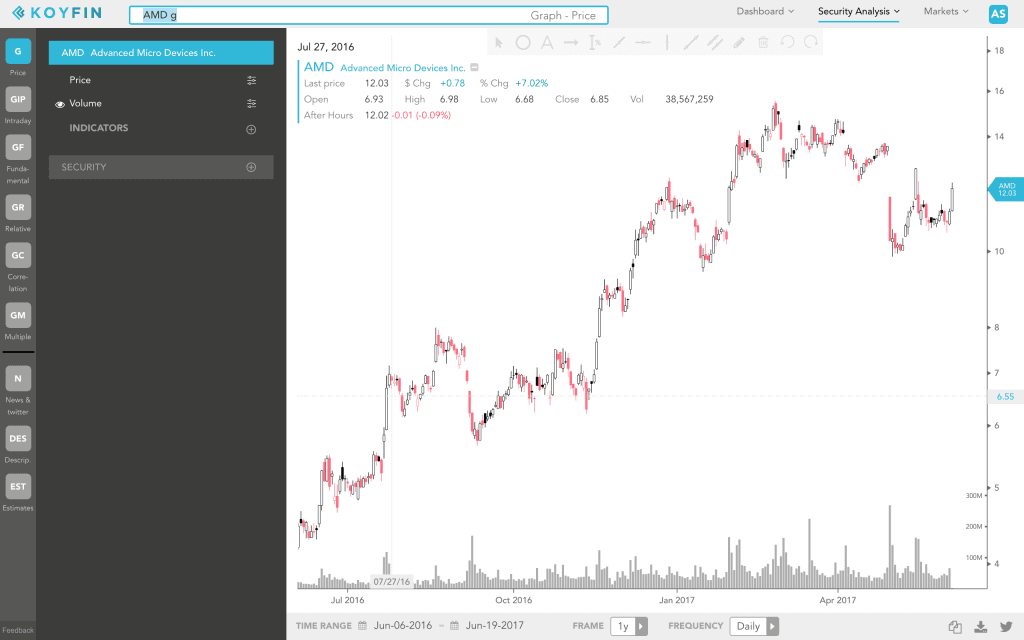
Koyfin in 2017: AMD candlestick price chart with volume, drawing tools and the module sidebar
2017 · Price chart, opened with “AMD g”
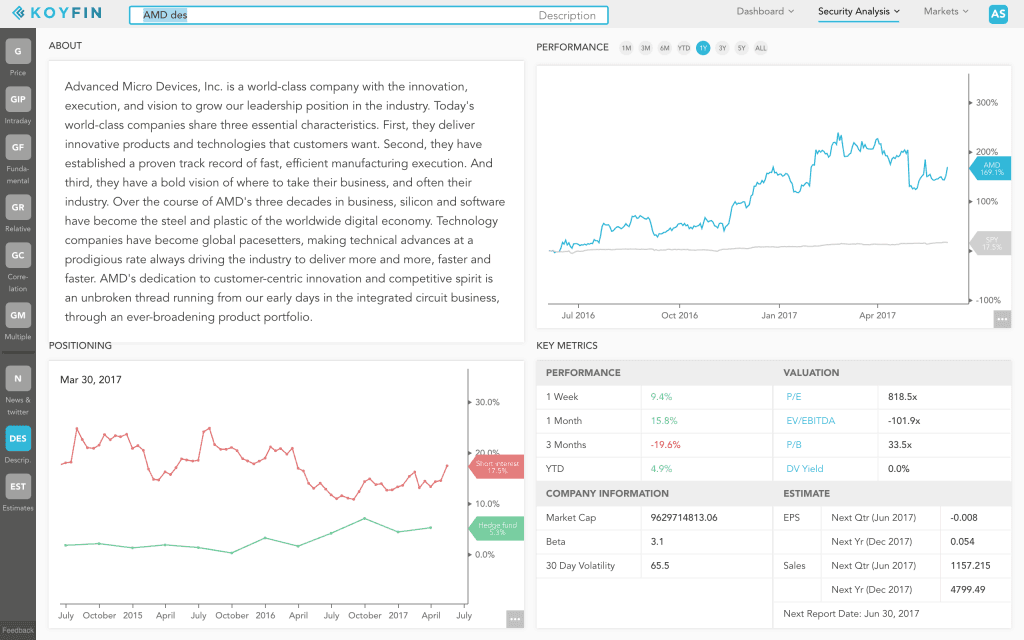
Koyfin in 2017: AMD description page with performance chart, short interest positioning and key metrics
2017 · Description, performance and key metrics
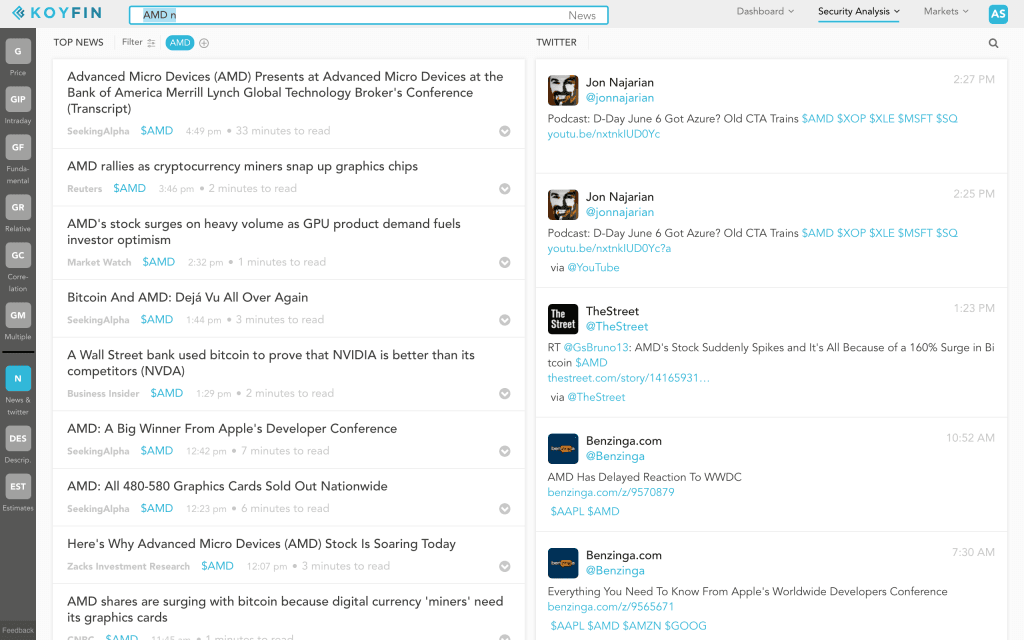
Koyfin in 2017: AMD news feed and Twitter stream side by side
2017 · News and Twitter, filtered by ticker

2017 — 2018 · The outcome

In production, then handed over.

Koyfin went into production in 2017 and launched publicly in 2018. In early 2018 it hired an in-house engineering team to take the product forward, and we helped recruit it. A year later, Koyfin raised its seed round from Social Leverage and Craft Ventures.

What happened next

Koyfin kept going

Our development work ended in 2017. Koyfin’s own team took it from there, and today it describes itself as a modern investment platform for advisors and investors.

users by 2023
500k
raised across two seed rounds
$6M+
paid plans launched
2021

Source: koyfin.com

Looking back

What made it work

  1. 01

    Senior advice before code

    Feasibility and technology choices were settled with the founder up front, so a bootstrapped budget went into the product, not into rework.

  2. 02

    Ship something real early

    An MVP in months beat a perfect plan. It gave Rob something to show, and the microservice architecture let it grow without a rewrite.

  3. 03

    Leave it in good hands

    When Koyfin was ready for its own team, we helped hire it. The project also expanded our fintech capabilities and our understanding of how financial markets operate.

Client testimonial

“Being a smaller company than other development firms, EzeTech provides a more personal approach to their projects that their clients appreciate. As the platform continues to grow, EzeTech was able to develop a quality product that can effectively scale in response to the increase in users.”
Rob Koyfman — Founder and CEO, Koyfin

Tech stack

Node.jsReactD3.jsMicroservicesReal-time data processingSlack and Symphony integrations

Bring us
the hard part.

Complex platforms, overdue rewrites, agentic workflows. That’s the work we enjoy most.

Contact Us